
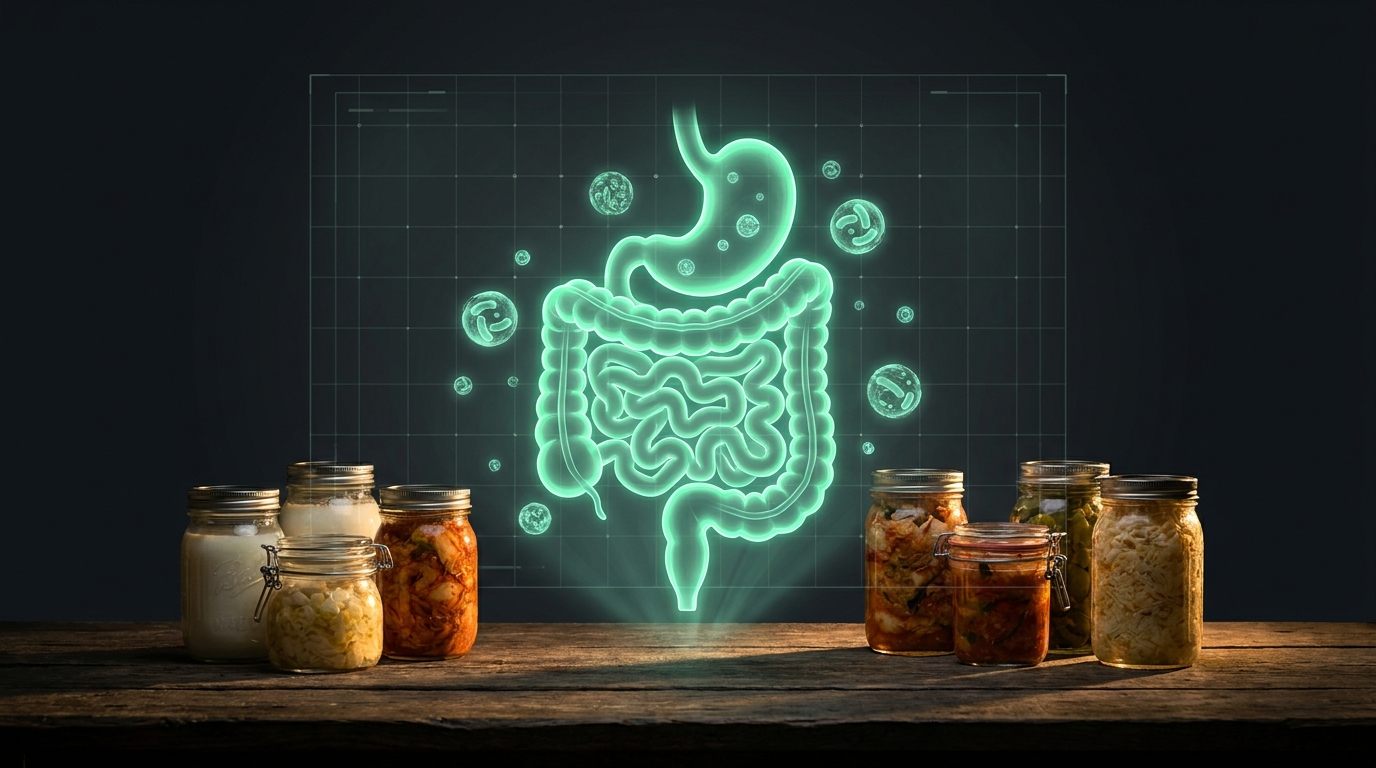
The microbiome: the invisible army living inside you
Inside you there's a whole city you never see: trillions of microorganisms working night and day. It's the gut microbiome — and keeping it on your side is one of the most powerful alliances in your health.
What the microbiome is
It's the collection of bacteria and other microbes that mostly inhabit the large intestine. Far from mere passengers, they ferment fiber, produce vitamins and protective compounds, train the immune system and talk to the rest of the body. A diverse, balanced microbiome is a sign of a healthy ecosystem.
Why it matters so much
- Digestion: it breaks down fibers the body can't digest alone, generating fatty acids that nourish the gut.
- Immunity: much of the immune system lives around the gut, in constant dialogue with these microbes.
- Mood and brain: the gut-brain axis links the microbiome to mood and stress regulation.
- Metabolism: it influences how you process energy and regulate appetite.
What strengthens the army
- Fiber and plant diversity: the favorite fuel of good bacteria. The more variety of vegetables, grains, beans, fruit and seeds, the more diverse the microbiome. A practical goal: many different plant types across the week.
- Fermented foods: yogurt, kefir, kombucha, sauerkraut and kimchi add live microbes and variety.
- Fewer ultra-processed foods: excess sugar, bad fat and additives impoverish diversity.
- Sleep, exercise and less stress: the environment also shapes who thrives in there.
What weakens it
Antibiotics without need (use only when a doctor prescribes), a low-fiber, monotonous diet, and chronic stress. Antibiotics save lives, but they clear the board — which is why you don't self-medicate with them.
The Lair's order
You don't need an expensive probiotic tub to start. You need to feed your allies: more plants, more variety, some ferments and less packaged food. Care for the invisible city and it patrols for you.
The 30-plants-a-week challenge
Large-scale research linked eating ~30 different plant types a week to a more diverse microbiome. Sounds like a lot, but "plant" counts broadly:
- Every vegetable, fruit, legume, grain, nut, seed, herb and spice counts as 1 point.
- A breakfast of oats + banana + chia + cinnamon already scores 4.
- A plate with rice, beans, a 3-item salad and fresh seasoning adds another 6-7.
The goal isn't accounting perfection — it's the mental push toward real variety.
A microbiome-friendly week (example)
- Monday: add a different legume (lentils instead of the usual beans).
- Tuesday: swap white rice for whole grain or quinoa.
- Wednesday: include a fermented food (plain yogurt or kefir).
- Thursday: two new vegetable colors at lunch.
- Friday: a fruit you haven't eaten in months.
- Weekend: cook something with 3+ vegetables and fresh herbs.
Signs your ecosystem needs attention
- Frequent bloating and gas outside your normal pattern.
- Erratic bowel habits for weeks.
- Repeated recent antibiotic courses.
- A diet reduced to ultra-processed foods for months.
None of this is a diagnosis — they're invitations to adjust the diet and, if they persist, to talk to a professional.
Frequently asked questions
Do I need a microbiome test? Commercial tests still have limited clinical utility — science can't interpret most individual results yet.
Does daily kombucha work miracles? It's a welcome ferment, not an elixir. Watch the sugar in commercial versions.
Did antibiotics destroy everything? The ecosystem recovers over weeks to months; varied fiber and ferments speed the rebuild.
Do probiotic capsules replace food? No — specific strains have specific uses; the daily foundation is fiber and variety.
Do sweeteners harm the microbiome? Evidence suggests some may alter it in certain people; moderation is the sensible path.
A word from the Lair: this content is informational and does not replace medical or nutritional care. Persistent digestive symptoms deserve professional investigation.
Sources & references
This article draws on information from the following authoritative sources:
Narrated by The Knight — the editorial persona of Dark Knight Health. Content is produced and reviewed by the editorial team based on authoritative health sources, following our editorial policy. It is informational and does not replace professional medical advice.
From the same sector of the City
Probiotics vs prebiotics: who's who in the gut war
One brings fresh soldiers; the other feeds the ones already there. Knowing the difference saves you money.
The gut-brain axis: why your 'second brain' shapes your mood
That knot in your stomach isn't just a figure of speech. Gut and brain talk constantly — and that line is worth gold.
Bloating and SIBO: when a puffed belly is more than a nuisance
A puffed belly is a universal complaint. It's almost always benign — but blaming 'SIBO' for everything became a trend.