All articles
Filter by category or search by keyword. All the Lair's content, organized.

Back pain: what actually works (and what's a posture myth)
There is no ONE perfect posture. There is capacity, variation and movement. What science actually recommends.
Fermented foods: the beginner's guide to living food
Before the fridge, humanity preserved food by fermenting it. Today we rediscover that this living food feeds your internal allies.

Overtraining: the signs you've pushed past the point
More isn't always better. There's a point where training more makes you weaker — and ignoring it costs dearly.
Vitamin D: the sun that's missing for those who live at night
Those who work far from the sun need extra attention. What science says about testing, supplementing and not overdoing it.
Bloating and SIBO: when a puffed belly is more than a nuisance
A puffed belly is a universal complaint. It's almost always benign — but blaming 'SIBO' for everything became a trend.
Foam rolling and massage: do they really work, or just feel good?
The foam roller hurts so good it feels like it's fixing something. Science says it is — just not the way you were told.
Whey protein: The Knight's no-nonsense guide
Do you need whey? Maybe not. Do you need enough protein? Without question. Full interrogation.
The gut-brain axis: why your 'second brain' shapes your mood
That knot in your stomach isn't just a figure of speech. Gut and brain talk constantly — and that line is worth gold.
DOMS: why you wake up sore two days after training
The soreness that arrives 24–48 hours later is neither a trophy nor a sign of a good workout. Understand what it really tells you.
HIIT: elite cardio for those with no time to lose
Weeks of conditioning in 20-minute sessions. The Lair's protocols — from recruit to vigilante.
Probiotics vs prebiotics: who's who in the gut war
One brings fresh soldiers; the other feeds the ones already there. Knowing the difference saves you money.
Sauna: the heat that science learned to take seriously
The sweat of the sauna isn't just relaxation — it's a passive workout for your cardiovascular system.
Injury recovery: ice, heat, mobility and what science changed
RICE has retired. Meet PEACE & LOVE and the real roadmap back to action without relapsing.
The microbiome: the invisible army living inside you
Trillions of allies patrol your gut. How you feed them decides which side they fight for.
Cold plunges: internet fad or real recovery tool?
Cold water wakes anyone up. But not every shock is a benefit — and the timing changes everything.
Functional strength training: get strong for real life
Train movements, not isolated muscles. The Knight's guide to strength that works inside and outside the Lair.
'Dopamine detox': what's actually true about the trend
You don't 'reset' dopamine — it's vital. But behind the wrong name lies a useful idea about taming stimulation.
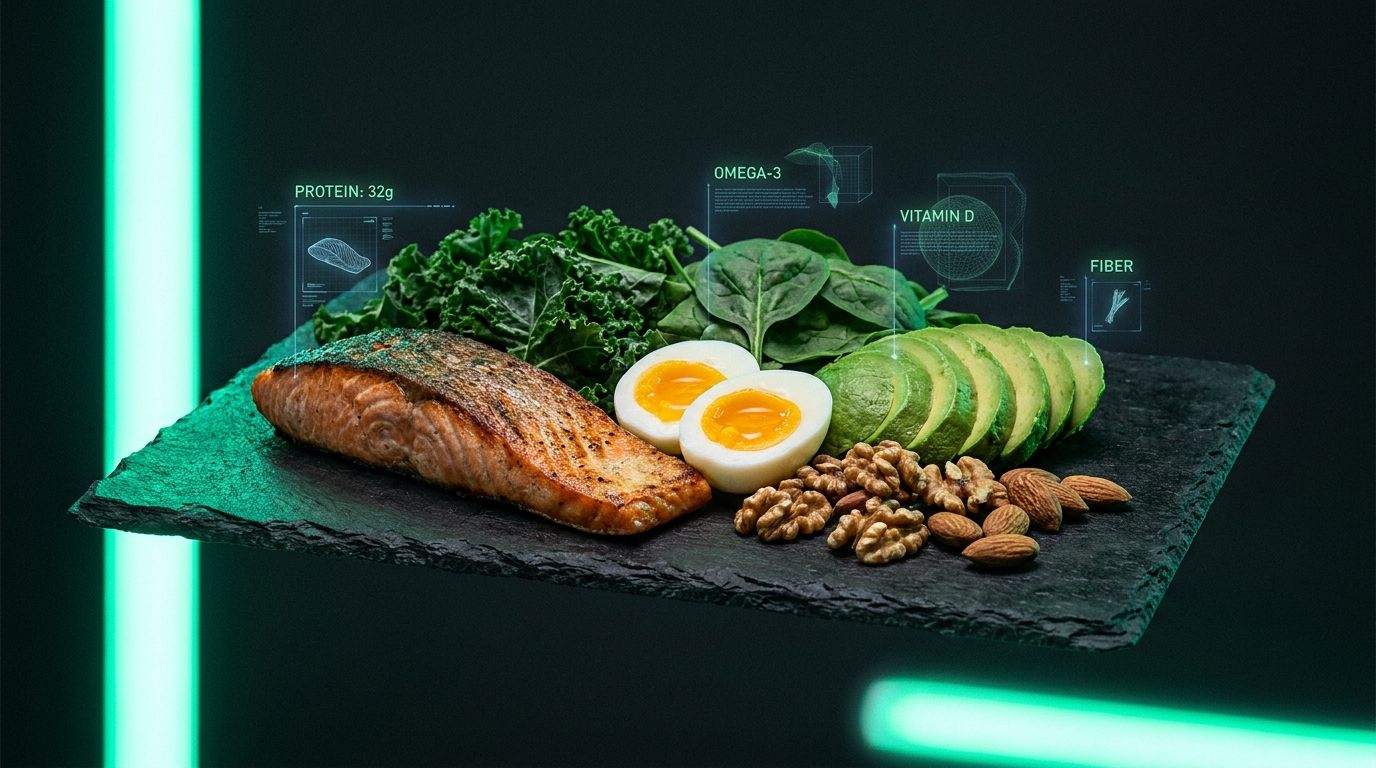
The high-protein breakfast: how to start the day without sabotaging your hunger
The first meal decides the day's hunger battle. Start wrong and you fight your appetite until nightfall.
Creatine: what science actually says (and what's a myth)
Few supplements have as much evidence — and as many myths. Let's separate fact from smoke.
Burnout: how to recognize exhaustion before it takes you down
Burnout doesn't arrive all at once — it piles up in silence until it snuffs the flame. Catching it early is everything.
Ultra-processed foods: how to spot the enemy hiding in your pantry
They disguise themselves as food, but they were engineered so you never stop eating. Learn to see through the disguise.
Deep sleep: the recovery protocol for those who live in the night
The cheapest treatment there is, and it's in your bed. The Lair's protocol to turn your sleep into real recovery.
Adult ADHD: beyond distraction, what science actually says
Not every distraction is ADHD, and not all ADHD is distraction. The topic became a trend — and the trend runs over the nuance.
Intermittent fasting: what the studies actually show
It's neither a metabolic spell nor a villain. It's a timing tool that works for some and gets in the way for others.
Anxiety: evidence-based tools to calm the mind
Fear is fuel — I use mine every day. Uncontrolled anxiety, though, paralyzes. The difference is in the tools.
Fiber: the forgotten nutrient almost nobody eats enough of
While the world fights over protein, fiber — which most people under-eat — remains the silent hero.
Cortisol and chronic stress: separating science from social-media panic
Social media turned cortisol into a boogeyman to sell supplements. The hormone is both hero and villain — it depends on dose and duration.
Protein in practice: how much to eat, when, and where to get it
Everyone talks protein; few get the math right. Let's turn theory into a plate.
Check-ups by age: the exams worth doing at each stage
Prevention is vigilance. The right exams at the right time catch the enemy before it strikes.

AI in your health: what it already does well and where you can't trust it blindly
Artificial intelligence became millions' new pocket clinic. A powerful ally — and a dangerous one when mistaken for a doctor.
'Cortisol belly': dismantling the myth that sells supplements
Social media invented a perfect villain to sell capsules: the 'cortisol belly.' The real science is duller — and more honest.
Peptides: the trendy frontier between serious science and the Wild West
Between the promise of rejuvenation and an unregulated gray market, peptides call for more caution than excitement.
Home-office ergonomics: stop destroying your back in that chair
The chair kills slowly. Not through imperfect posture, but through motionless hours — and that has a cheap fix.
Continuous glucose monitors for non-diabetics: useful or biohacker hype?
The sensor that saves diabetics' lives became a trend among curious healthy people. An interesting tool — with a hefty dose of exaggeration.
Testosterone: what actually raises it (and what just empties your wallet)
The internet sells testosterone in a capsule to every man. The truth is less glamorous and cheaper: the basics rule.
Collagen: what the evidence supports and what's just a pretty promise
Between glass-skin hype and total skepticism, there's a lukewarm, useful truth about collagen.
Headaches: the most common types and the signs that demand help
Almost everyone has had one. Most are benign — but certain signs turn a headache into an emergency.
Annual bloodwork: the biomarkers worth discussing with your doctor
A drop of blood tells a story you can't feel. Knowing which chapters to ask for makes your check-up far more useful.
Thyroid: the symptoms that slip by (and when to investigate)
A small gland in the neck regulates the body's engine. When it misfires, the symptoms disguise themselves as a thousand other things.
Omega-3: who actually needs to supplement (and who's just spending)
Fatty fish covers it for many. But some genuinely gain from the capsule — and there's a lot of misleading labeling along the way.
Immunity without myths: what actually strengthens your defenses
You don't 'boost' the immune system with a magic shot. But you can strengthen your defenses with the meat-and-potatoes of health.
HRV explained: what heart rate variability says about you
It's not about the heart beating fast or slow. It's about the variation between one beat and the next — and it tells secrets about your recovery.
Insulin resistance: the early signs most people ignore
Long before diabetes shows up on a test, the body was already sending signals. Learning to read them is an advantage.
Creatine beyond muscle: women, the brain and the science that changed
The most studied supplement in the world broke out of the weight room and into the brain — women's included.
Real hydration: how much water you need (and the role of electrolytes)
Drinking water is simple — but almost everything you were told about 'liters per day' is a guess wrapped in marketing.
Wearables: what your watch measures well (and what it only estimates)
The gadget on your wrist is a powerful ally — as long as you know what it truly measures and what it merely guesses.
GLP-1 (the new wave of weight medications): what to know with a cool head
The drug class that became a phenomenon changed the weight game. Too powerful and serious to treat like a pharmacy fad.
Magnesium glycinate: why it became the supplement of the moment (and when it makes sense)
Not all magnesium is equal. Glycinate has a calming reputation — and there's a reason, within limits.
Strategic napping: the secret weapon for those who must perform at night
A well-calculated nap is pocket-sized recovery. Miscalculated, it sabotages the night's sleep.
Iron and women's energy: when the tiredness has a cause only a test reveals
That tiredness you blame on your routine may have a name only a blood test reveals — and it's common among women.

Blue zones: what to actually copy from those who live longest
Around the world, some places concentrate centenarians. Their secret isn't a superfood — it's a way of living.
10,000 steps: magic target or marketing myth?
The round number came from an ad campaign. Science tells a more interesting — and more generous — story.
Chronotypes and shift work: surviving against the clock
Not everyone was built for the same schedule — and those who work against their own clock need tactics.
Women's bone health: the battle you win at 30 to triumph at 70
The bone that will hold you up at 70 is being built now. For women, that account opens early — and it's worth a fortune.
Sarcopenia: why losing muscle is the retirement you don't want
Past a certain age, the body starts quietly laying off muscles. You can — and should — halt that layoff.
Home workouts: how to get strong without a whole gym
You can't always reach the fully equipped Lair. Your body, bands and one pair of dumbbells already build real strength.
Sleep apnea: the silent thief that works while you sleep
It steals your rest without you noticing and bills your heart for it. Loud snoring isn't a joke — it can be a warning.
PMS and PMDD: from a common nuisance to what needs treatment
Not all PMS is the same. For some women, the premenstrual phase goes beyond nuisance and becomes a serious — and treatable — disorder.
NAD+ and anti-aging supplements: cutting-edge science or expensive promise?
The longevity industry sells youth in a capsule. The science is more exciting in the lab than on the shelf.
Mobility: unlock the body modern life stiffened
Range of motion with control is what separates a body that responds from a body that locks up at the worst moment.
Insomnia: the first-line treatment isn't a pill
Against chronic insomnia, science doesn't point to a pill first — it points to relearning your relationship with the bed.
Training with your menstrual cycle: science or fad?
Syncing training to the cycle became a craze. There's a real core — and plenty of exaggeration sold on top of it.
Grip strength: the longevity biomarker that fits in your hand
The strength of your handshake says more about your future than you'd think — and it's trainable.
VO₂max: the number that predicts how long (and how well) you live
A single number sums up your ability to produce energy under effort — and it speaks to your life expectancy.
Sleepmaxxing: what's worth it and what's just an internet fad
The internet turned sleeping into a gear sport. Some things help; many are expensive theater.
Perimenopause and menopause: the no-taboo guide to a better transition
A natural transition half of humanity goes through — and one that's spoken of too little and too poorly. Time to change that.
Healthspan vs lifespan: living long isn't enough
No one just wants to add years to life. The goal is to add life to the years — and that has a name: healthspan.
Zone 2: the slow cardio that builds a bulletproof heart
The cardio that impresses no one at the gym is the one that protects your heart the most over a lifetime.